Thursday, March 24, 2016

Historical Food Fortnightly Challenge #6 - Juicy Fruits

6.  Juicy Fruits (March 11 - March 24)  It's fruits!  Do something with fruits.  It doesn't get more simple than that.  Bonus points for use of heritage crops and ingredients!


It's March 24th.  Some parts of the country are warm and the flowers are blooming.  Others are experiencing blizzard conditions and snow and hail.  While I live in North Carolina and am enjoying the former, the author of our Twenty Lessons in Domestic Science was probably freezing in Minnesota in 1916.  And fruits?  The availability of fresh and juicy fruits at this time of year was probably just a dream.

 
There is a wonderful recipe in Marian Cole Fisher's book for English Rocks and it is curious and interesting at the same time.  I've known English Rocks as a cookie similar to a fruitcake.  It would contain dried fruits and nuts.  The recipe in our book has only one fruit ingredient - currants.

 
Simple ingredients, right?  Heavens, no!  There was not a currant to be found in any of my local (and some not so local) grocery stores.  An online search brought me to Bob's Red Mill Black Currants for $8.24 a pound, or SunMaid Zante Currants for $28.81 for 6 10 ounce boxes.  Why is the simple currant so elusive and so expensive?

The answer comes from several resources and the best description is here:

http://www.currantc.com/index.php?src=gendocs&ref=Are%20They%20Currants%20or%20Raisins%3F&category=v4_Health_Benefits

"The commercial cultivation of Currants was outlawed in 1911 in the U.S. by an act of Congress. The lumber industry put forth the bill believing that the botanical disease known as White Pine Blister Rust, which need both the White Pine and Currants to complete it’s cycle, could wipe out the then valuable White Pine industry. Because of this legislation, Currants have remained off the radar screen of the American Consciousness until recently when Greg Quinn, a farmer, was able to overturn the law in New York by demonstrating that new resistant varieties eliminated the specter of the disease."

So it is a simple matter of supply and demand and the supply apparently is very limited especially in view of some recent studies linking the currant to prevention/treatment of Alzheimer's Disease.  The Zante Currant is actually a grape although somewhat more tart than the grapes which constitute our supply of raisins and therefore is closer to the tartness of the currant.

With that knowledge in hand I decide that my 1916 cookbook may have required currants but perhaps by then the supply was already limited and as my grandmother (19 years old in 1916) might have done, raisins are a nice substitute.

Simple ingredients.

Flour and baking powder measured and ready for sifting.

Sifted 4 times.

Six tablespoons of shortening ready to cut into flour/baking powder mixture.

My cutting-in tool.

Ready for the next step.

3/4 cup of sugar and pinch of salt added.

3 eggs beaten.

Eggs added to dry ingredients.

A nice moist dough results.

Lastly my currant substitute - one cup of raisins.

Mounds placed on well-greased baking sheet.

After 20 minutes in 350 degree oven.

Also, as my English grandmother would have done, this wonderfully sweet raisin cookie called an English Rock would have been accompanied by a perfect English tea.

Warm, soft, chewy with raisins, and sweet!

Tea time!  English Rocks and Twining's.

Love always,
Jeanette

Tuesday, March 8, 2016

Historical Food Fortnightly Challenge #5 - Roasts

5.  Roasts (February 26 - March 10)  They're a staple of the historic table, in many different shapes and forms and types.  It's also a cooking technique.  Try a historic recipe for a roast, or a recipe that involves roasting, and tell us how it turned out.

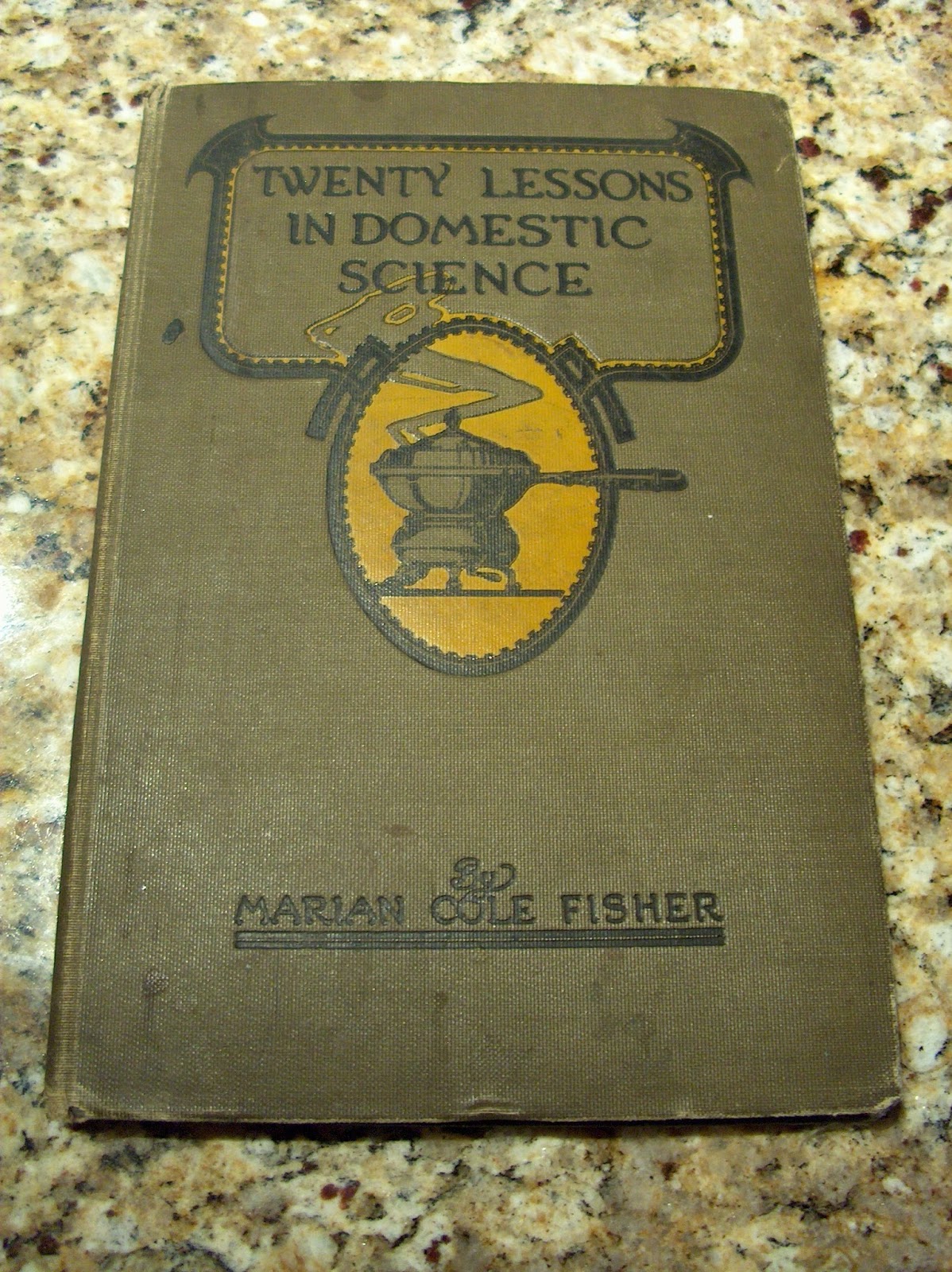
Again we are going back 100 years to the book Twenty Lessons in Domestic Science by Marian Cole Fisher Copyright 1916. 

In Lesson XIII Meats are instructions for boiling and then roasting a ham and an interesting recipe for a Cider Sauce to serve with the ham.


Finding an unsmoked ham proves futile and I don't want the smoke flavors to change the outcome of my recipe.   I discover this wonderful pork shoulder picnic roast and it's only $4.87 for 6 pounds.  Perfect.  Ingredients assembled.

Realizing I forgot to make the bread crumbs ahead of time I make a 2016 substitution for my 1916 recipe.
Following the directions, I pour boiling water over the roast and gently simmer for 90 minutes.  I think about what a difference this will make in the outcome of the roast.  Being precooked this way will mean less time in the dry heat of the oven, the fat will boil off leaving the roast leaner and healthier, and the surface of the roast will be able to brown nicely without being overcooked.  I think I like this method.

 
The roast is boiled and now it's time to remove the skin and fat.

 
A coating of bread crumbs sprinkled with brown sugar, cinnamon, ground cloves, nutmeg and finished with whole cloves, and the roast is ready for a 350 degree oven.

 
45 minutes later and the roast is perfect!

 
While the roast sits a while before slicing, I'll make the Cider Sauce.  I couldn't find any apple cider at the grocery store which is fine as I think making the substitute will be interesting.  What I don't think will be at all interesting are the gherkins.  I wondered if this meant pickled small cucumbers or just small cucumbes.  As I think about the other ingredients in the recipe I decide to use pickled gherkins.  What is so interesting about that is that my husband hates hates hates pickles.  We were waiting at the airport one day for a delayed flight and we realized we should eat lunch.  What appeared to be a tater tot on the plate actually turned out to be a deep fried pickle.  Hubby took one bite and spit everything back on his plate.  I laughed so hard I almost fell off my chair.  But I am going to use the sweet gherkins and warn him that I don't know how the sauce will taste.  Crossed fingers!


With some sides of honeyed carrots and seasoned cabbage, the baked ham is extraordinary!  Tender, juicy, flavorful!  Delicious alone but incredible with the cider sauce.  The sauce is tangy and smooth with just enough spice and tart to balance the sweetness of the ham coating.


What about the pickles?  Hubby loves the sauce and that's all that matters, right?  What he doesn't know........well, you understand. *wink*
Love always,
Jeanette

Tuesday, March 1, 2016

Historical Food Fortnightly Challenge #4 - Sweets for the Sweet

4.  Sweets for the Sweet (February 12 - February 25)  It's sugar, and maybe spice, and definitely everything nice.  Test out a historic recipe for sweets, sweetmeats and candies - but don't let them spoil your appetite!

 
February 29th - Leap Year Day, an extra Monday (why?), and our wedding anniversary.  Our 24th wedding anniversary is a perfect excuse to have a sweet something special created for the Historical Food Fortnightly Challenge #4.  It's four days past the due date, but since we only have a wedding anniversary every four years,  I'm okay with the plan.

For all of the Challenges for 2016 I'm using a home study course book entitled Twenty Lessons in Domestic Science by Marian Cole Fisher, Copyright 2016. 

 
What could be more perfect to celebrate a wedding anniversary than a Bride's Cake?


There is a lot of good information regarding cake baking and I focus on this little bit about layer vs. loaf cakes.  I remember my grandmother, who was born in 1897, baking cakes in the loaf pans she used for baking bread, so I decide to do the same and not worry about the adjustments required for layer cakes.

 
As with all the other recipes I've used in the 100-year-old book, the ingredients are simple.
 
 
I grease and flour the pan.


Sift the flour once, add the baking powder, then sift four more times.


Unsalted butter and sugar ready for creaming.


Eggs separated and ready for beating until very stiff.  I always separate my eggs over one bowl and then pour the yokes in a second bowl and the whites in a third.  I'm not always delicate with my eggs and as you can see there are some broken yokes and some white from the 7 eggs I had to use.  But not to waste, these will be good with milk and become scrambled eggs for breakfast tomorrow!


When everything is put together in order the batter becomes beautiful and smooth.


Some splitting on top of the loaf during baking and the aroma is heavenly!


While the cake cools I make some icing with this very simple recipe.  I was going to make the Orange Icing but then realized I ate my last orange at breakfast.  So Plain Icing it will be.


Just confectioner's sugar and hot milk, mixed, and allowed to set for an hour.


The icing is thin and I drizzle it across the Bride's Cake, add some orange blossoms in honor of wedding tradition, and here is our Sweets for the Sweet!


The icing sets up into a beautiful shiny glaze and both cake and icing are delicious!  The cake is very dense and flavorful, the icing mild and sweet and the perfect compliment.  Just a perfect cake for two people on their wedding anniversary!


Love always,
Jeanette

Thursday, February 11, 2016

Historical Food Fortnightly Challenge #3 - History Detective

3.  History Detective (January 29 - February 11)  For this challenge, you get to be the detective!  Either use clues from multiple recipes to make a composite recipe, or choose a very vague recipe and investigate how it was made.

During my planning for the Historical Food Fortnightly Challenges for 2016 I realized that in the book I'm using:   Twenty Lessons in Domestic Science by Marian Cole Fisher, copyright 1916, there are quite a few ingredients, methods, and terms that are a mystery to me.

 
One recipe and one ingredient in particular caught my eye for the History Detective Challenge.

 
I love cottage cheese and this recipe looks so simple that I imagine myself having a life-long supply of fresh cottage cheese if I can just figure out the mysterious ingredient - sour milk.  Sour milk?  Such as what I pour down the drain when I've left it in the refrigerator a bit too long?  How can that possibly be an ingredient for anything edible?

As with any good detective work I start with what I already know.

During my freshman and sophomore years of high school I lived with a Finnish family in northern Wisconsin.  If any culture knows about dairy foods, it's the Finns, and my host family was no different.  We had dairy cows which meant fresh raw milk in large containers in the refrigerator.  So rich it had to be stirred to combine the layer of cream into the rest of the milk.before we would pour it into large glasses for our meals.  We also kept another large container in the refrigerator which was a mystery to me at the time but I have since learned it was piimä - a Finnish sour milk similar to buttermilk.  Could that be the mystery ingredient in my recipe?  I was in charge of the baking for the family and every Saturday made 12 loaves of fresh bread.  I also made biscuits and remember using the piimä in the biscuits.  So now I'm wondering why we didn't make cottage cheese as we were a very self-sufficient household with gardens, dairy cows, pigs, and chickens.  Of course being a detective is easy when you have the sum total of the world's knowledge at your fingertips via your computer. If you are interested in the dairy foods of the Finns as I was, I'll share a good link here.


The next bit of detective work was with the subname of my recipe - Schmierkase.  I learn this is a German word pronounded schmier-ka sa, literally "smear cheese" used to spread on bread or crackers.  Some more internet work and I find recipes that make me believe this to be more of a cream cheese than a cottage cheese.  So as I'm sharing this search with my husband, he informs me that in recipes that he has used specifying "sour milk" he uses regular milk with vinegar.  Vinegar?  Really?  So I'm off to search more recipes through Mother Earth News and a host of websites I've used previously with information on cooking naturally.  What I finally learn is that, truly, this recipe wants sour milk.  But sour milk created from raw milk.  Alas, I don't have a cow.

What I do have are a lot of people like me who would love to create their own cottage cheese with the ingredients we have on hand in 2016.  I finally create a recipe of my own from bits and pieces offered from foodies around the world which will be, hopefully, similar to the 1916 recipe.  I'll share that with you here because I'm going to make it again and again and hope you will enjoy it too.  So here it is:

1916 Cottage Cheese With 2016 Ingredients
 
1 gallon 2% milk
1/2 cup vinegar
1 tsp salt
 
Warm milk over medium heat until 190 degrees.  You can also watch milk closely and remove from heat just before it begins to boil.  With milk removed from heat add vinegar, stir gently, and allow to cool.  Pour into colander lined with double layer of cheesecloth and drain off whey.  Pour curds into a bowl.  Sprinkle with salt, mix gently.  Just before serving you can add a little heavy cream or half-and-half for a silky texture.
 
That's it!!  How simple is that?  You really don't need a thermometer.  You don't need cheesecloth either as I found recipes where the curds were simply poured into the colander.  There were recipes to add dill, caraway seeds, fruits and nuts.  There were recipes to use the cottage cheese in lasagna and pies.
 
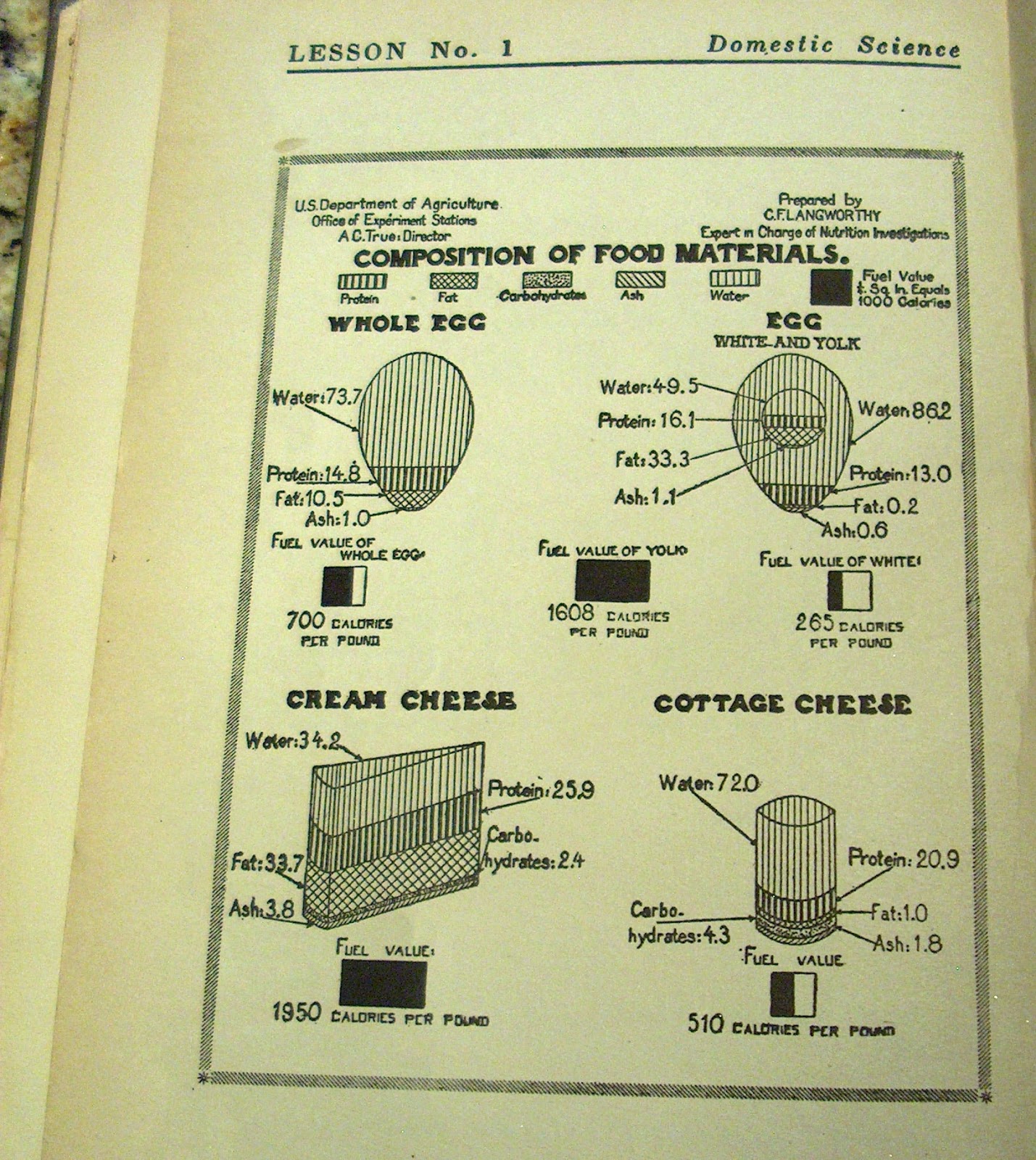
One of the interesting pieces of information in the Twenty Lessons in Domestic Science book has been discovering how much was actually known 100 years ago about the function and principles of food, the composition of food, and how the different constituents of food were used in the body.  Here is some information from the book relating to milk and cheese.


Amazing to see the ingredients of today's milk carton and see how correct the information was 100 years ago.
Here is the easy process to make your own most marvelous cottage cheese and spread.  Enjoy!
Ingredients using a half gallon of whole milk.  Didn't even follow my own recipe. Haha!

Warm milk over medium heat until it reaches 190 degrees or just before boiling.

Remove pan from heat and add vinegar.  Stir gently.  Only 1/4 cup for a half gallon of milk.

Immediately the curds and whey start to separate.  I start thinking about Little Miss Muffet.  Do you know that nursery rhyme?

Double layer of cheesecloth spread over colander placed inside glass bowl.

Cooling.

Separating during cooling.

Pan is cool to touch and a lot of separation has taken place.

Pour into the cheesecloth.

The whey pours off first leaving those beautiful cheese curds!


Draw up the sides of the cheesecloth to allow the remaining whey to drain.

I put the colander over another bowl to allow the whey to drain some more.

Once you are pleased with the consistency, it's time to add the salt.

Yes, I tried some at this point and loved it!

Salt added and stirred gently.

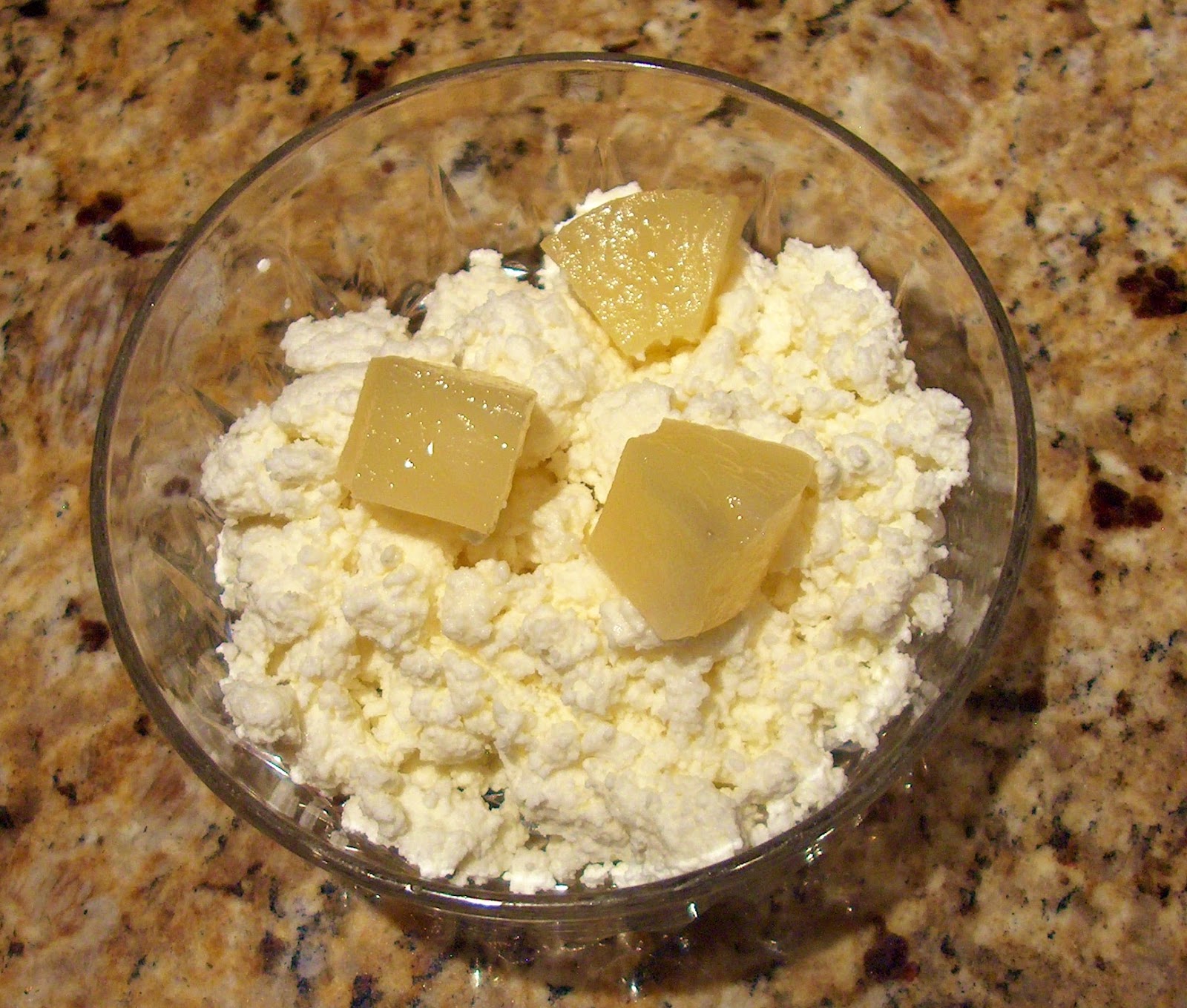
I didn't add any cream as I wanted to taste it this way.  It has a light consistency and a very mild flavor.  Very fresh and wonderful served with pineapple chunks.

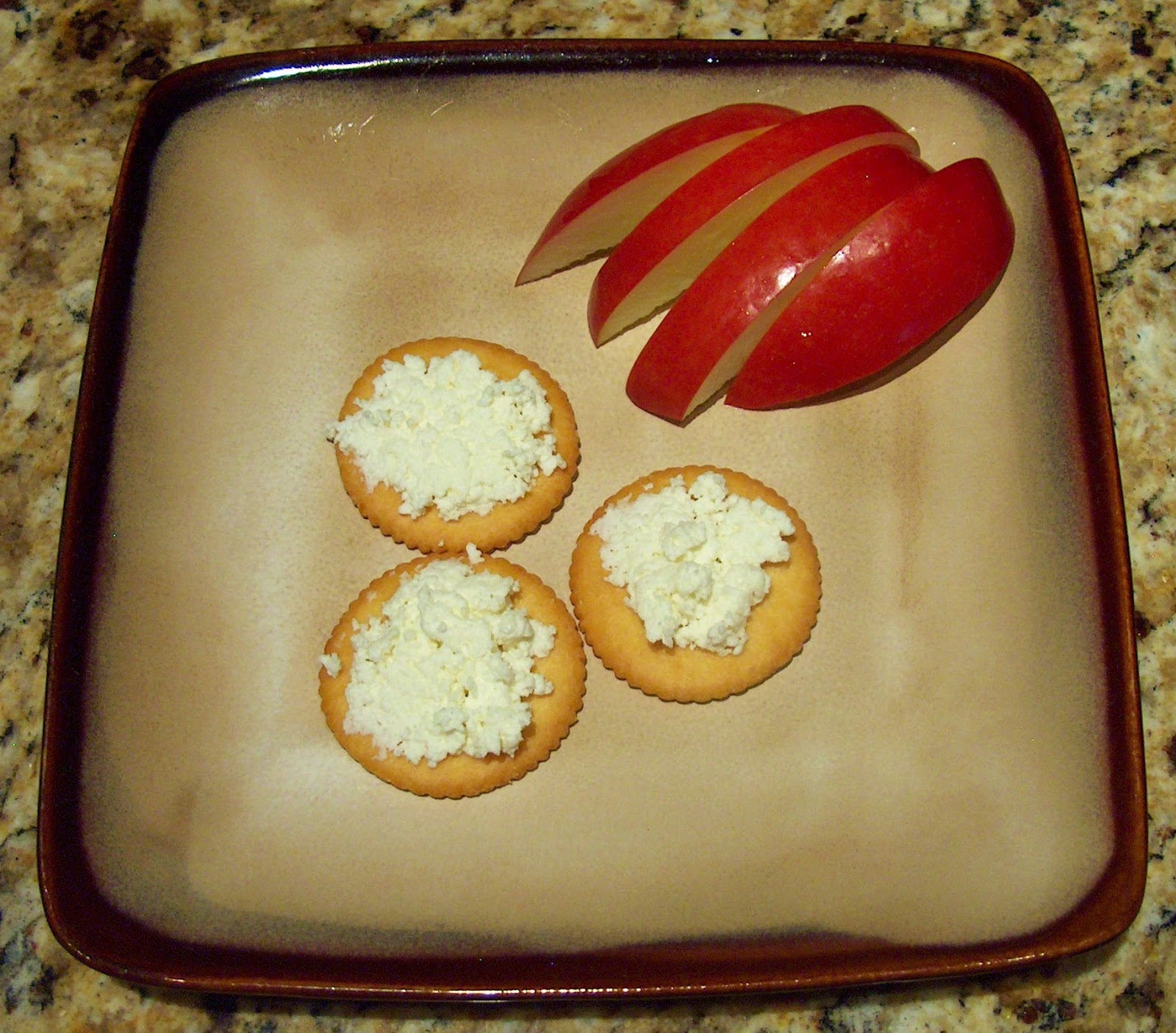
Excellent spread on a cracker or an apple slice!
It's a keeper!
 
Wishing you all love and great food!
Jeanette